
Brut
Blanc de Noir, Pinot Noir, Brut
Fine and persistent perlage, intense straw yellow with greenish reflections. Fragrant aroma with fruity and floral notes. Complex and vibrant on the palate.

Classic method Pinot Noir, rested for months in a cave.
Discover the three winesThe bottles are carried down by hand and rest there for months, in the dark, at ten degrees.
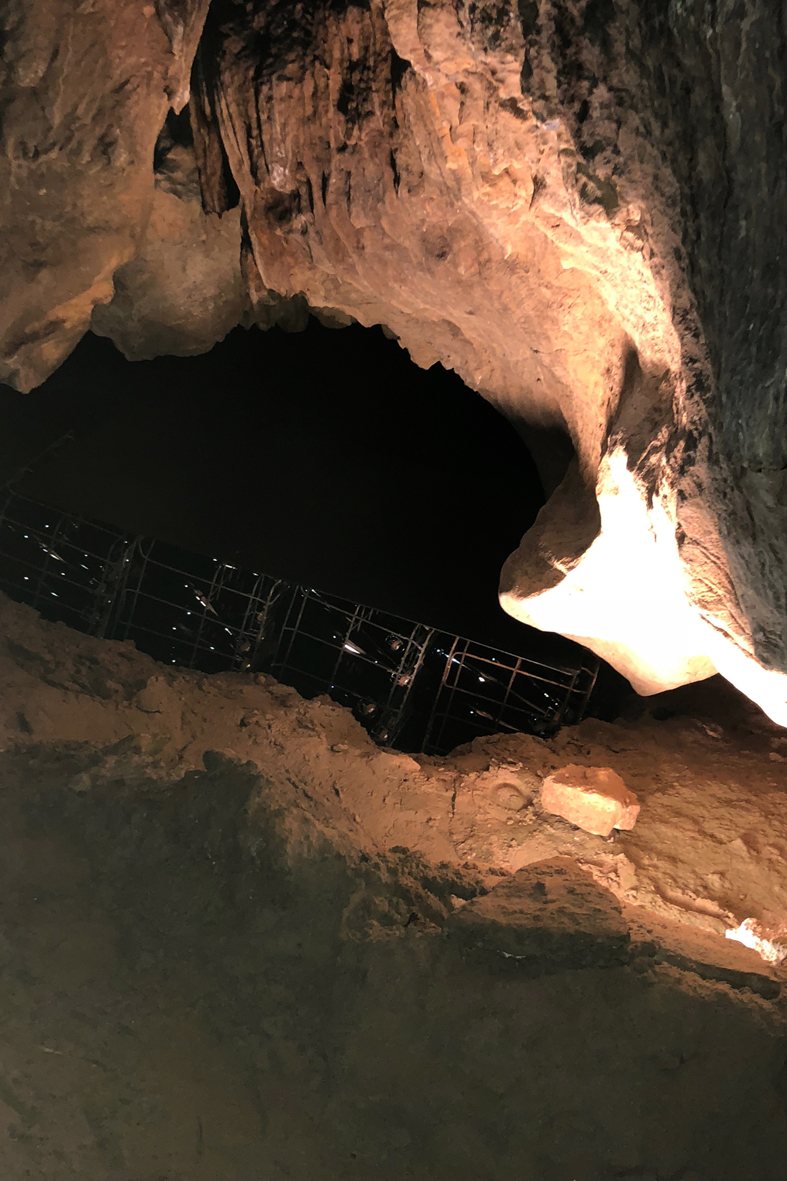
Letargo comes from two young wine lovers who have worked in food and agriculture around Cuneo for years. The spark was a day trip to the Bossea Caves, in Frabosa Soprana, and with it the idea: let a classic method Pinot Noir finish its second fermentation underground.
The classic method, the same as Champagne, creates the bubbles through a second fermentation in the bottle. To complete it, Letargo's bottles are carried by hand through galleries on different levels of the cave, and rest there for months.
Unlike a cellar, the cave needs no machines: it keeps 10 °C and 90% humidity on its own, in every season, in total darkness. It is the slow rest a sparkling wine needs before it is ready.
The first bottle was released on 21 March 2019: the first day of spring, when the bears wake from hibernation.
10 °C all year round, 90% humidity with no need to regulate it, no light.
Between 80,000 and 12,000 years ago, the Bossea Caves were home to cave bears. They came here to hibernate through the winter and to give birth to their cubs in safety, among underground streams, lakes and stalagmite columns. Open to visitors since 1874, they are now the oldest show caves in Italy.
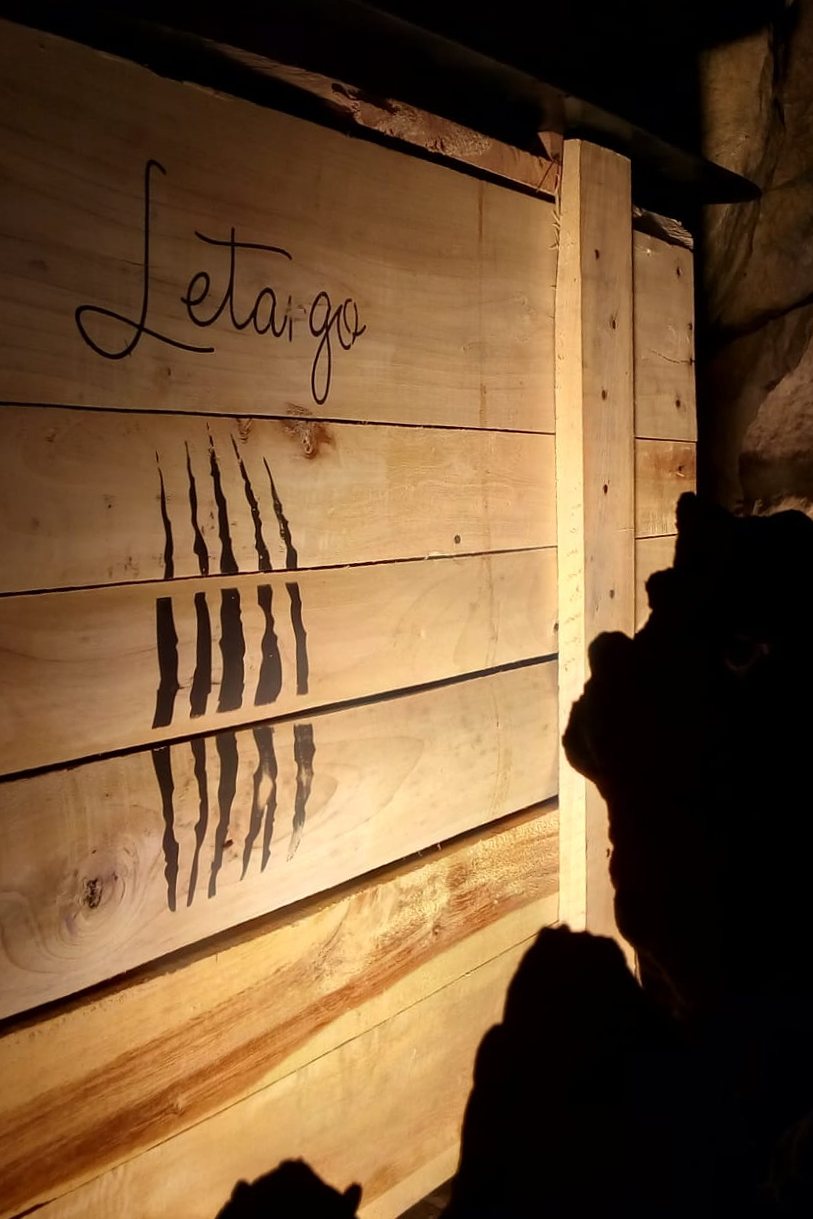
The deep grooves left by their claws can still be seen on the walls. They are the same marks you find on the label of every bottle, and on the door of the cave cellar.
Today the wine rests in the same galleries, for the same reason: darkness, and a temperature that never changes. Hence the name: letargo is Italian for hibernation. Letargo is made in collaboration with the Bossea Caves Nature Reserve.
Move your pointer, or your finger, across the wall: the torch lights up the claw marks.
Three classic method Pinot Noir sparkling wines, aged in the Bossea Caves: two Blanc de Noirs and a Rosé de Noir. Each with its own foil on the label.
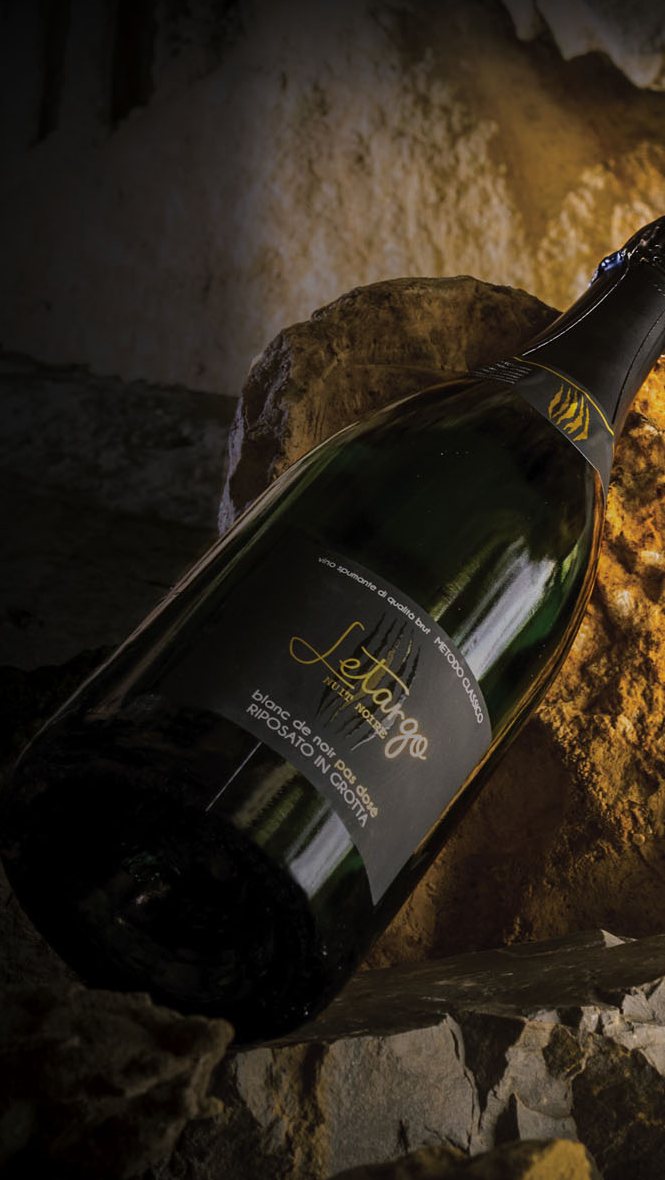
Blanc de Noir, Pinot Noir, Brut
Fine and persistent perlage, intense straw yellow with greenish reflections. Fragrant aroma with fruity and floral notes. Complex and vibrant on the palate.

Blanc de Noir, Pinot Noir, Pas Dosé
It rests in the narrowest, darkest spot in the cave, hence the name. Zero dosage, no added sugar. Notes of bread crust, red fruits and citrus; fresh, vertical and mineral on the palate. With oysters and raw seafood.

Rosé de Noir, Pinot Noir, Brut
Light pink, fine and persistent bubbles, creamy foam. Fruity and fragrant at first, then a delicate hint of toasted bread. Fresh and savoury on the palate, with a dry, persistent finish.
It means the second fermentation in the bottle, the prise de mousse, is completed in the Bossea Caves instead of a cellar. The bottles rest for months in the dark, at 10 °C and 90% humidity: conditions the cave keeps on its own all year round.
In Bossea, in the municipality of Frabosa Soprana, province of Cuneo, Piedmont, inside a nature reserve. Open to visitors since 1874, they are the oldest show caves in Italy. Letargo is made in collaboration with the Bossea Caves Nature Reserve.
A white sparkling wine made from black grapes, here Pinot Noir, pressed without taking colour from the skins. Brut and Nuit Noire are Blanc de Noirs; the Rosé is a Rosé de Noir, which keeps a little of that colour.
Because of all the bottles, it is the one that rests in the narrowest part of the cave, where light never reaches. It is also the purest of the three: a Pas Dosé, with zero dosage.
The dosage, the sugar added after disgorgement. Brut has a little; Pas Dosé, like Nuit Noire, has none at all: it is the driest and most direct of the three.
For a bottle, a case or a wine list, write to us: you will hear back from a person.
Frazione Naviante, 1 bis